
Moxibustion doesn’t get nearly as much attention as acupuncture, many people find moxibustion to be an effective treatment after trying other methods.
Practised in traditional Chinese medicine for over 2,500 years, it’s more than just burning herbs near your skin, and the results are exactly why our patients at Nuo ER TCM keep coming back.
If you’ve been curious about what Moxibustion TCM does and whether it’s worth trying, here are 7 potential benefits based on traditional use and clinical research.
Key Takeaways
Moxibustion uses the gentle heat of burning dried mugwort to warm specific acupuncture points, stimulate blood flow, and restore balance with no acupuncture needles required.
- Its numerous benefits go beyond pain relief, covering digestion, hormonal balance, immunity, fertility, and stress.
- It is safe, non-invasive, and relaxing. Many first-timers find the treatment surprisingly comfortable.
- A qualified TCM therapist will assess your health concerns before recommending a personalised treatment plan.
What Is Moxibustion?
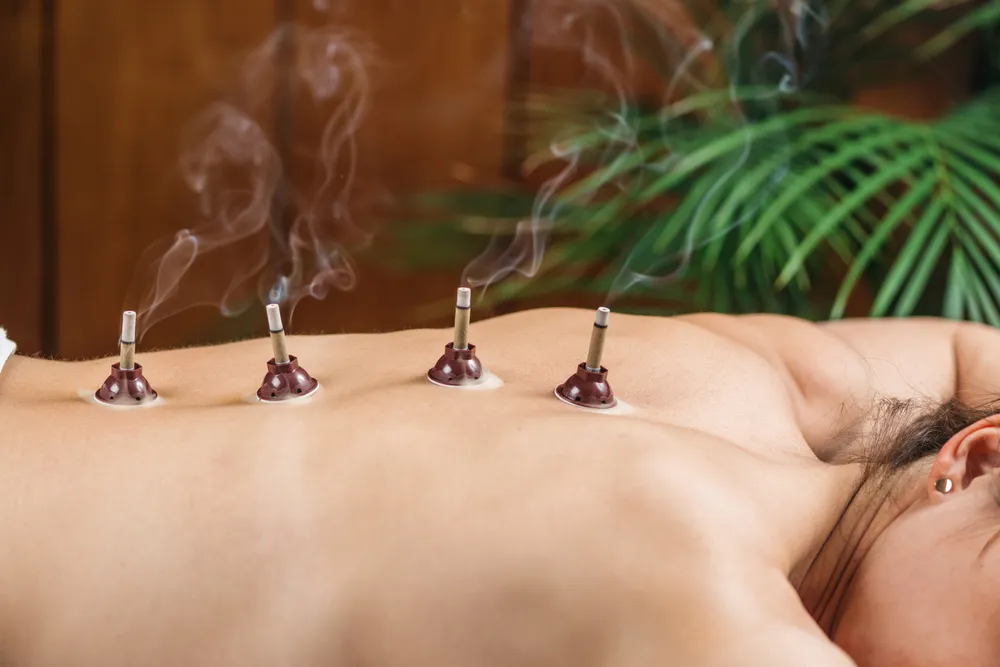
Moxibustion is a core therapy in traditional Chinese medicine TCM in which dried mugwort is compressed into a moxa stick or cone and burned near or directly on the skin at specific acupuncture points.
The gentle heat generated penetrates beneath the skin, warming the meridians, encouraging smooth qi flow, and improving blood circulation throughout the body.
In Chinese medicine, pain and illness often stem from stagnant Qi and blood, worsened by the accumulation of cold and damp in the tissues.
Burning moxa helps dispel cold, moxibustion stimulates blood flow, and helps the body restore balance naturally.
Two main approaches:
| Type | Method | Best For |
| Indirect moxibustion | Moxa stick held above skin. It’s gentle warmth, no contact | Beginners, chronic pain, general wellness |
| Direct moxibustion | A small cone is placed on the skin and removed before burning | Deep, localised conditions can be done by experienced practitioners only |
Moxibustion is also commonly used alongside acupuncture, with moxa attached directly to acupuncture needles to combine heat and needling for enhanced therapeutic effects. It is particularly effective for joint pain and deep muscle tension.
Safety, Side Effects, and Contraindications
Moxibustion is generally well-tolerated, but like any therapy, it comes with a few things worth knowing before your first session.
Common Mild Side Effects
These are normal, short-lived responses to the heat and the mugwort itself:
- Warmth sensation: The intended effect, signalling that Qi and circulation are being stimulated.
- Temporary redness: Light flushing on the treated area as blood flow increases.
- Mild itching: Possible if you are sensitive to mugwort.
- Mild burns: A small risk if the moxa stick or cone is held too close to the skin — easily avoided with an experienced practitioner.
When Moxibustion Should Be Avoided
There are specific situations in which you should not undergo moxibustion in TCM. Avoid this treatment if you have:
- Acute fever: Adding heat when the body is already overheated can be counterproductive.
- Open wounds, severe burns, or broken skin: Never apply moxa over compromised skin to avoid infection or further injury.
- Abdomen and lower back during pregnancy: In line with Singapore TCM Practitioners Board guidelines, these areas are not treated during pregnancy. In some cases, moxibustion may still be beneficial elsewhere under qualified supervision.
Use with Caution
- Diabetes or reduced skin sensation: Lower sensitivity to heat raises burn risk; sessions are kept shorter and closely monitored.
- Blood thinners or hypersensitive skin: Technique is adjusted to protect the skin.
- Elderly patients and children (under 14): Thinner, more sensitive skin requires gentler, shorter sessions.
Smokeless Alternatives
If you have asthma, respiratory sensitivities, or simply prefer less smoke, smokeless moxa — made from carbonised mugwort — delivers the same therapeutic infrared heat with minimal smoke.
7 Moxibustion TCM Benefits Worth Knowing
1. Chronic Pain Relief and Improving Circulation
Chronic pain, whether it’s muscle pain, body aches, or persistent joint pain, is the most common reason people try moxibustion for the first time.
The soothing warmth of a moxibustion session penetrates deep into the tissues, improving blood flow, easing muscle tension, and helping to reduce inflammation at the source.
For those dealing with ongoing pain that hasn’t responded well to conventional approaches, moxibustion therapy applied at specific acupuncture points offers meaningful, drug-free relief.
2. Digestive Health
Moxibustion helps with far more than easing pain. Its therapeutic effects on the digestive system surprise most new patients.
In Traditional Chinese Medicine (TCM), digestive issues like bloating, loose stools, and poor appetite typically indicate a “cold” or weakened digestive system.
Moxibustion applied to abdominal acupoints warms Spleen and Stomach Qi, promotes smooth digestion, and helps alleviate symptoms that often linger for years. [3]
3. Boosting Immunity and Energy Levels
One of the lesser-known benefits of moxibustion is its preventive effects.
In Chinese medicine, moxibustion was traditionally applied at the change of seasons, specifically to boost immunity and build resilience.
In a 2025 phase 1/2 pilot study of acupuncture and moxibustion (ST36) conducted for middle-aged and elderly individuals,[2] it has been shown that the procedure:
- Reduced LDL levels – supports better circulation, helping your body stay energised
- Decreased UA levels – helps minimise inflammation that can weaken the body over time
- Reduce LDH and α-HBDH levels – supports stronger immunity and faster recovery from fatigue
For anyone who feels consistently run-down, catches illness easily, or is rebuilding after prolonged stress, regular moxibustion treatment can meaningfully improve energy levels and overall health over time.
4. Women’s Health — Menstrual Pain, Hormonal Balance, and Irregular Periods
Menstrual cramps, irregular periods, menstrual pain, and broader menstrual irregularities all share a common TCM root: cold and stagnation disrupting blood flow and qi flow to the uterus.
Moxibustion applied to Guanyuan (CV4) and Sanyinjiao (SP6) — two of the most important specific acupuncture points for female health — warms the uterus, improves pelvic circulation, and works to restore hormonal balance gradually. [4]
Most women notice improvement in menstrual pain and cycle regularity within two to three months of consistent treatment.
Unlike painkillers, this holistic approach addresses the underlying pattern rather than masking symptoms. It is often used alongside acupuncture and herbal medicine as part of a comprehensive plan tailored to each patient’s constitution.
5. Fertility Support
Moxibustion is traditionally used in TCM to support fertility by addressing patterns such as a “cold uterus,” which is believed to affect reproductive function.
Applying moxa to points like CV4 (Guanyuan) and along the kidney meridian is thought to gently warm the body, support circulation in the pelvic area, and promote relaxation.
While some studies suggest potential benefits, the evidence remains limited, and moxibustion is best used as a complementary approach under medical guidance. [5]
6. Postpartum Recovery — Mother Warming
The mother warming technique (产后艾灸) is among the most-requested Nuo ER TCM treatments for new mothers.
After childbirth, the body has expended significant blood and Qi. Without replenishment, this manifests as fatigue, low energy, hormonal imbalance, and slower healing.
Mother warming applies gentle warmth from a moxa stick along the lower abdomen, lower back, and key energy points to rebuild the body’s resources from the inside out. [6]
- Accelerates postpartum recovery – promotes uterine healing and reduces lochia duration
- Supports physical restoration – relieves uterine contraction pain
- Safe complementary therapy – used alongside standard postpartum care
Sessions typically begin one to two weeks after delivery, ideally combined with warming herbal medicine for full effect.
7. Stress Reduction and Better Sleep
Patients come in for muscle pain or digestive issues and walk out feeling unexpectedly calm. That’s not a coincidence. Moxibustion’s gentle warmth activates the parasympathetic nervous system, directly countering the chronic stress response that disrupts sleep, tightens muscles, and depletes well-being over time.
In TCM terms, sustained stress creates Liver Qi stagnation, disrupting the smooth flow of energy and manifesting as insomnia, irritability, and persistent tension.
Moxibustion helps reduce stress by moving stagnant Qi and grounding the nervous system. Most patients report noticeably better sleep in the days following a session.
With consistent treatment, the improvement in overall well-being compounds.
What to Expect at Your First Session
Every moxibustion session at our clinic starts with a proper consultation. Our TCM physicians assess your tongue, pulse, and overall constitution to understand the root patterns behind your health concerns.
During treatment, a lit moxa stick is held 3–4 cm above specific acupuncture points on your body. The sensation is a spreading, soothing warmth and deeply relaxing.
Over the years, we’ve found that first-timers are almost always surprised by how pleasant it feels. Sessions run 30–60 minutes, depending on what’s being addressed.
A few things to keep in mind:
| Do | Avoid |
| Wear loose, comfortable clothing | Cold drinks and raw food on treatment day |
| Rest and keep warm afterwards | Strenuous activity post-session |
| Inform your physician of any sensitivities | Self-treating at home without guidance |
Safety note: Moxibustion is safe when performed by experienced practitioners. Some may experience mild skin redness or allergic reactions to smoke from burning mugwort — smokeless options are available. Pregnant women can benefit from moxibustion under professional supervision, but self-treatment is not advised. Always consult a qualified TCM practitioner if you have existing medical conditions.
Moxibustion TCM is for Everyone
The benefits of moxibustion extend well beyond what most people expect, from easing pain and digestive issues to supporting reproductive health, postpartum recovery, immunity, and sleep.
Moxibustion helps the body do what it’s designed to do: restore balance and heal. Whether you’re addressing a specific condition or simply investing in your overall health, a holistic approach guided by an experienced TCM physician makes all the difference.If you’re in Singapore and ready to experience it for yourself, our team at Nuo ER TCM is here to help. Contact us today.
References:
[1] Leighton & Farquhar (2025). Ancient Heat vs. Modern Hands: Why Moxibustion. May Revolutionize Physical Rehabilitation. Preprints.org https://www.preprints.org/manuscript/202512.0790
[2] Chen et al. (2025). A Phase 1/2 Pilot Study of Acupuncture and Moxibustion at Zusanli (ST36) as a Prophylactic Treatment in Middle-Aged and Elderly Individuals. Frontiers in Biomedicine, Springer. https://link.springer.com/article/10.1007/s11684-025-1192-9
[3] Liu et al. (2025). International Clinical Practice Guideline on the Use of Moxibustion for Functional Dyspepsia. Journal of Integrative Medicine. https://www.sciencedirect.com/science/article/pii/S2095496425000640
[4] Song et al. (2025). Systematic Review and Meta-Analysis of the Effectiveness of Moxibustion for Primary Dysmenorrhea. Frontiers in Medicine. https://www.frontiersin.org/journals/medicine/articles/10.3389/fmed.2025.1545146/full
[5] Zhang et al. (2025). Effects of Acupuncture and Moxibustion Therapy on Endometrial Receptivity and IVF-ET Pregnancy Outcomes. Frontiers in Medicine. https://www.frontiersin.org/journals/medicine/articles/10.3389/fmed.2025.1702214/full[6] Wang et al. (2025). The Impact of Acupuncture and Moxibustion Treatment on Uterine Microcirculation and Maternal Recovery. PubMed Central. https://pmc.ncbi.nlm.nih.gov/articles/PMC12727353/